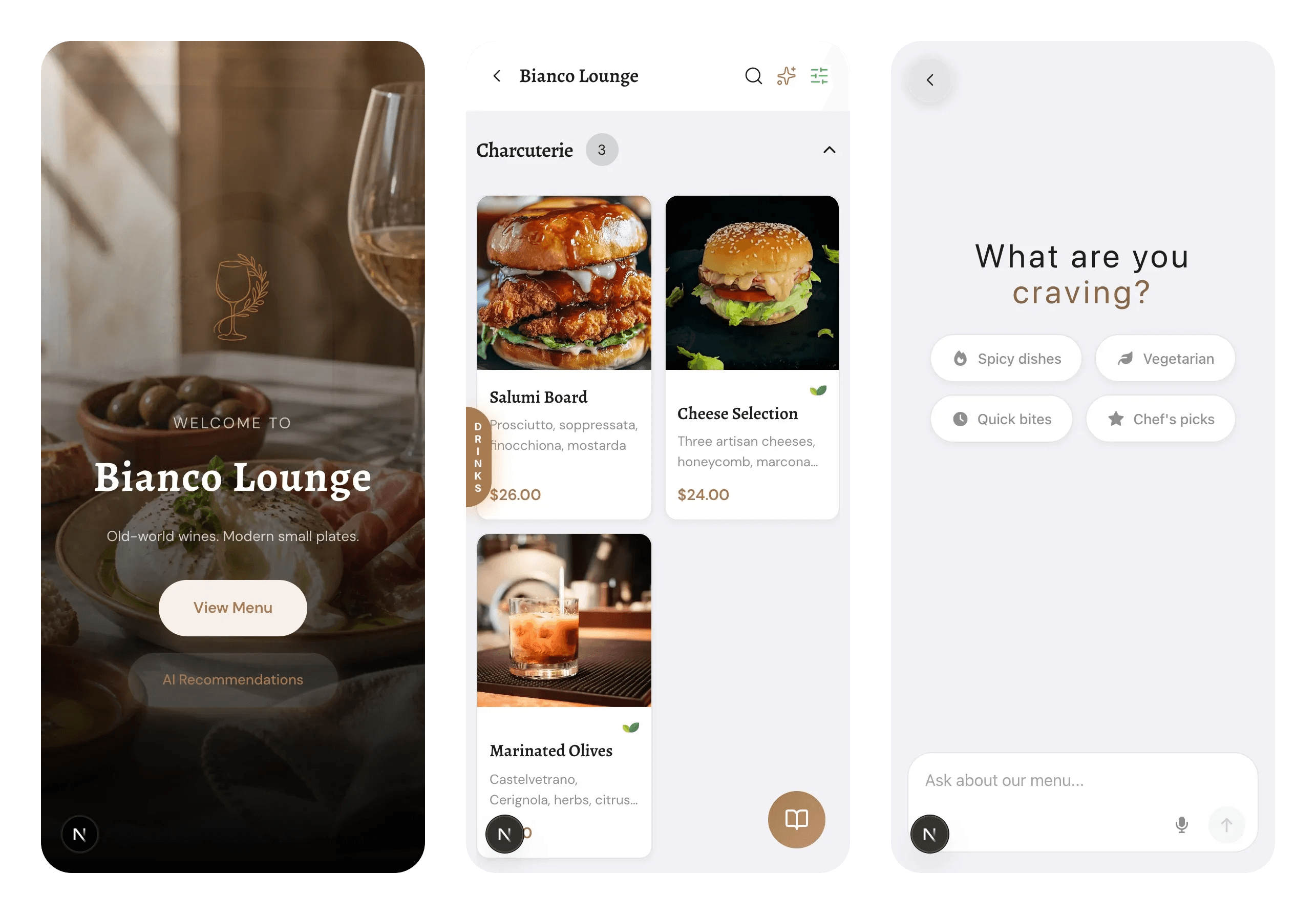
For any dine-in restaurant, profitability is a delicate equation. You want your guests to have a relaxing, memorable experience, but you also need to maximize your table turnover rate during peak hours.
The dilemma is obvious: How do you seat more parties per night without making your current guests feel rushed out the door?
The secret isn't to speed up how fast your guests eat—it's to ruthlessly eliminate the "dead time" before they even place an order. And in 2026, the most effective tool for doing this is a smart, mobile-optimized digital menu.
Here is how modern digital menus are helping restaurants increase table turns by 10-15% while actually elevating hospitality.
The Hidden Cost of "Dead Time"
Think about the traditional dining sequence during a Friday night rush:
1. The host seats the guests and hands them paper menus.
2. The server greets them a few minutes later, taking drink orders.
3. The server returns with drinks and asks if they have any questions about the menu.
4. The guests spend another five minutes deliberating, asking about dietary restrictions, or asking what the server recommends.
5. The order is finally placed.
This discovery phase—the time between sitting down and the kitchen receiving the ticket—often takes 15 to 20 minutes. That is pure "dead time" where no value is being created.
1. Speeding Up the Discovery Phase
A well-designed digital menu drastically cuts down this dead time. When a digital menu is immediately accessible via a QR code or an NFC tap on the table, the guest's discovery process begins the second they sit down.
Because they aren't waiting for a physical menu to be handed out, they can start browsing immediately. High-quality food photography and clear descriptions help them make decisions much faster than they would when reading a block of plain text. By the time the server arrives to greet the table, the guests already know exactly what they want.
2. Letting AI Handle the Q&A
One of the biggest bottlenecks during the ordering process is the Q&A session. Guests have questions: "Is this gluten-free?", "What wine pairs well with the salmon?", or "Can I get this without cilantro?"
While servers are happy to answer these questions, it takes time. An interactive digital menu equipped with an AI Menu Assistant (like the one built into MenuClips) acts as a virtual sommelier and maître d'. Guests can type their questions directly into their phone and get instantaneous, accurate answers based purely on your menu data.
This empowers the guest to make informed decisions immediately, freeing your servers to cover more tables simultaneously without sacrificing service quality.
3. Eliminating the "Menu Shuffle"
In busy restaurants, paper menus are constantly being rotated, cleaned, and redistributed. This causes friction at the host stand and delays the seating process.
A digital menu means every single guest has a pristine, perfectly updated menu in their pocket the moment they walk through the door. No more waiting for the host to wipe down sticky menus before a party can be seated.
Frictionless Service is Better Service
Reducing your table turn time by just 10 minutes per party can allow you to seat an entire extra turn during your peak dinner service. Over a month, that translates to thousands of dollars in additional revenue.
The best part? You achieve this not by rushing your guests through their meal, but by eliminating the tedious, frustrating waiting periods.
With MenuClips, you can instantly deploy a beautiful, branded digital menu that speeds up discovery, answers guest questions via AI, and keeps your dining room flowing smoothly. Your servers will be less stressed, your kitchen will receive tickets faster, and your guests will leave happier.