# Turn Customer Feedback into Smarter Restaurant Growth in 2026
For decades, the restaurant industry has operated on a delayed feedback loop. A guest has a subpar experience, they say nothing to the server, pay their bill, and leave. Two days later, a 2-star review appears on Google or Yelp. By the time you read it, the opportunity to fix the problem has entirely vanished.
In today's competitive hospitality landscape, relying on public review platforms to understand your guests is no longer enough. The restaurants that are scaling fastest in 2026 are those that have closed this feedback loop. They capture guest sentiment in real-time, handle complaints privately before they escalate, and leverage positive feedback to fuel organic growth.
Here is how turning customer feedback into a smart, integrated system can transform your restaurant.
The Problem with Traditional Feedback Methods
Historically, restaurants have tried a few methods to solicit feedback:
1. The Server Check-in: "How is everything tasting?" Most guests will automatically say "Great, thanks," even if their steak is overcooked, simply because humans are naturally conflict-averse.
2. Comment Cards: Rarely filled out, and usually only by guests who are exceptionally angry or exceptionally delighted.
3. Receipt Surveys: "Go to this URL for a chance to win a $50 gift card." The friction is too high, and the conversion rate is dismally low.
These methods fail because they either demand too much effort from the guest or put them on the spot socially. The solution is finding a way to ask for feedback when the guest is already engaged, without the pressure of a face-to-face confrontation.
Enter the In-Menu Rating System
The shift from paper menus to smart digital menu design software has opened up an entirely new channel for guest communication. Because guests are already interacting with their smartphones to browse your dishes and even chat with AI menu assistants, it is the perfect place to gently ask for their thoughts.
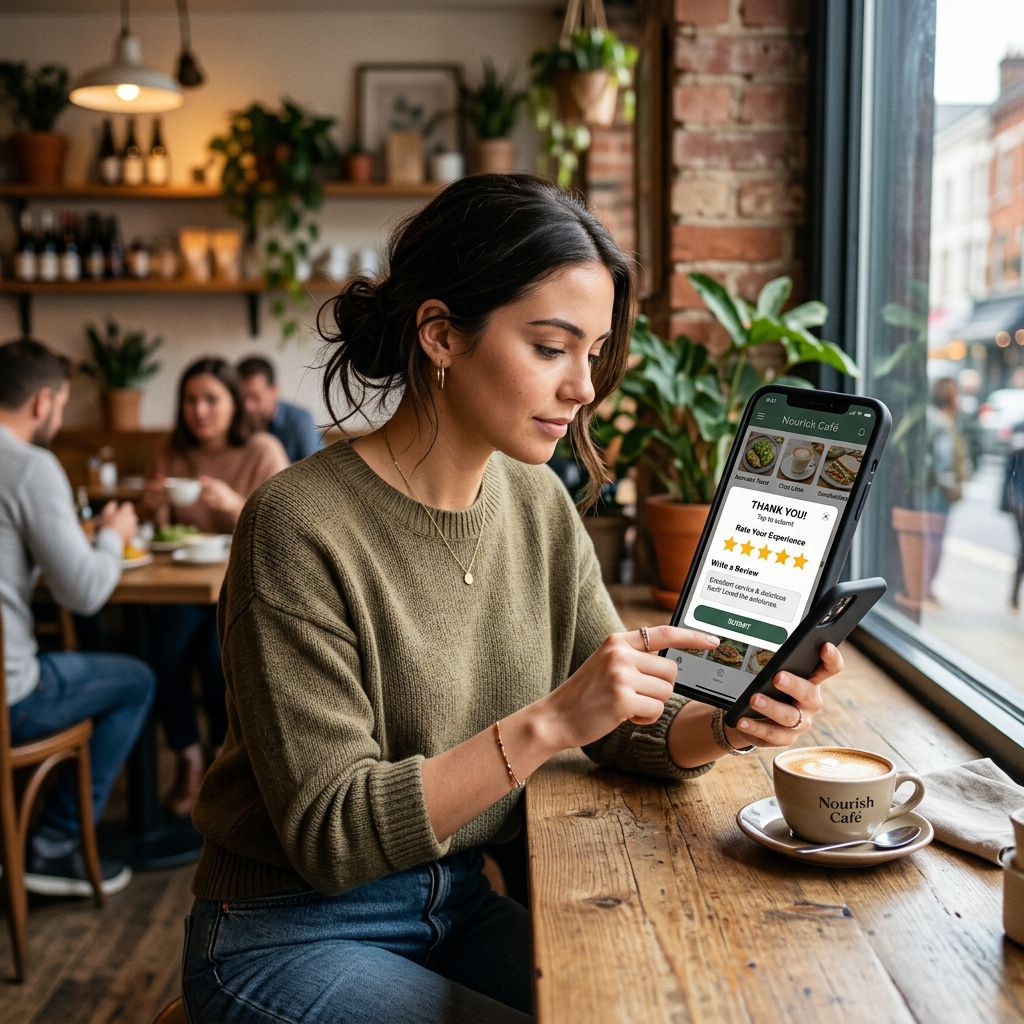
A modern digital menu platform, like MenuClips, allows you to integrate an In-Menu Rating System. After a guest has been browsing for a few minutes, or right after they request their digital check, a simple, non-intrusive prompt appears asking them to rate their experience out of five stars.
Because the friction is zero—just a quick tap on their screen—the volume of feedback you receive skyrockets.
Triaging Feedback in Real-Time
When you collect feedback digitally while the guest is still sitting in your dining room, you unlock the superpower of real-time recovery.
Imagine a guest taps a 2-star rating on their digital menu because their food took 45 minutes to arrive. Instead of that frustration boiling over onto Yelp, it is instantly routed to your restaurant's web dashboard or your manager's smartphone.
Your manager can immediately walk over to Table 12, apologize for the delay, offer a complimentary dessert, and turn a frustrated customer into a loyal advocate. You have intercepted a bad review and replaced it with a memorable recovery story.
Amplifying the 5-Star Experiences
While mitigating negative experiences is crucial, amplifying the positive ones is where real growth happens.
An intelligent feedback system doesn't just collect stars; it routes them based on the score. If a guest leaves a 4 or 5-star rating, the system can automatically prompt them to share their love publicly: "We are so glad you're having a great time! Would you mind taking 10 seconds to leave us a review on Google?"
Because you are only asking your happiest guests for public reviews, your online rating naturally climbs. A higher rating means better local SEO, more visibility on map apps, and ultimately, more foot traffic through your front door.
Data-Driven Menu Engineering
Finally, feedback isn't just about service; it's about the food. When feedback is tied directly to a digital menu, you can start tracking patterns at the item level.
If multiple guests rate their experience highly but leave comments that the new spicy chicken sandwich was a bit dry, you have actionable data. You don't need to guess why the sandwich isn't selling as well as you hoped. You can tweak the recipe, push the update live on your digital menu instantly, and watch the sales recover.
Start Listening to Your Guests
Your guests are already telling you exactly what they want—you just need the right tools to listen. By integrating feedback directly into your digital menu experience, you can protect your online reputation, empower your staff to fix issues instantly, and turn happy diners into your best marketing channel.
Ready to start capturing real-time feedback? MenuClips makes it effortless to integrate smart ratings directly into your beautiful digital menus.
---
Frequently Asked Questions (FAQ)
Q: How do I get more Google reviews for my restaurant?
A: The most effective method is to automate the ask. By using in-menu rating systems, you can filter for guests who rate their experience 4 or 5 stars, and automatically prompt them to share that specific rating publicly on Google.
Q: Will asking for feedback annoy my guests?
A: Not if it is frictionless. A simple 5-star rating prompt at the end of a digital menu experience is much less intrusive than a manager interrupting a conversation or a long email survey.
Q: Can I respond to private feedback?
A: Yes. Modern restaurant menu software allows your managers to see the table number associated with the feedback, so they can walk over and address the issue directly while the guest is still in the building.