# The Hidden Cost of Paper Menus: Why Smart Restaurants Are Going Digital in 2026
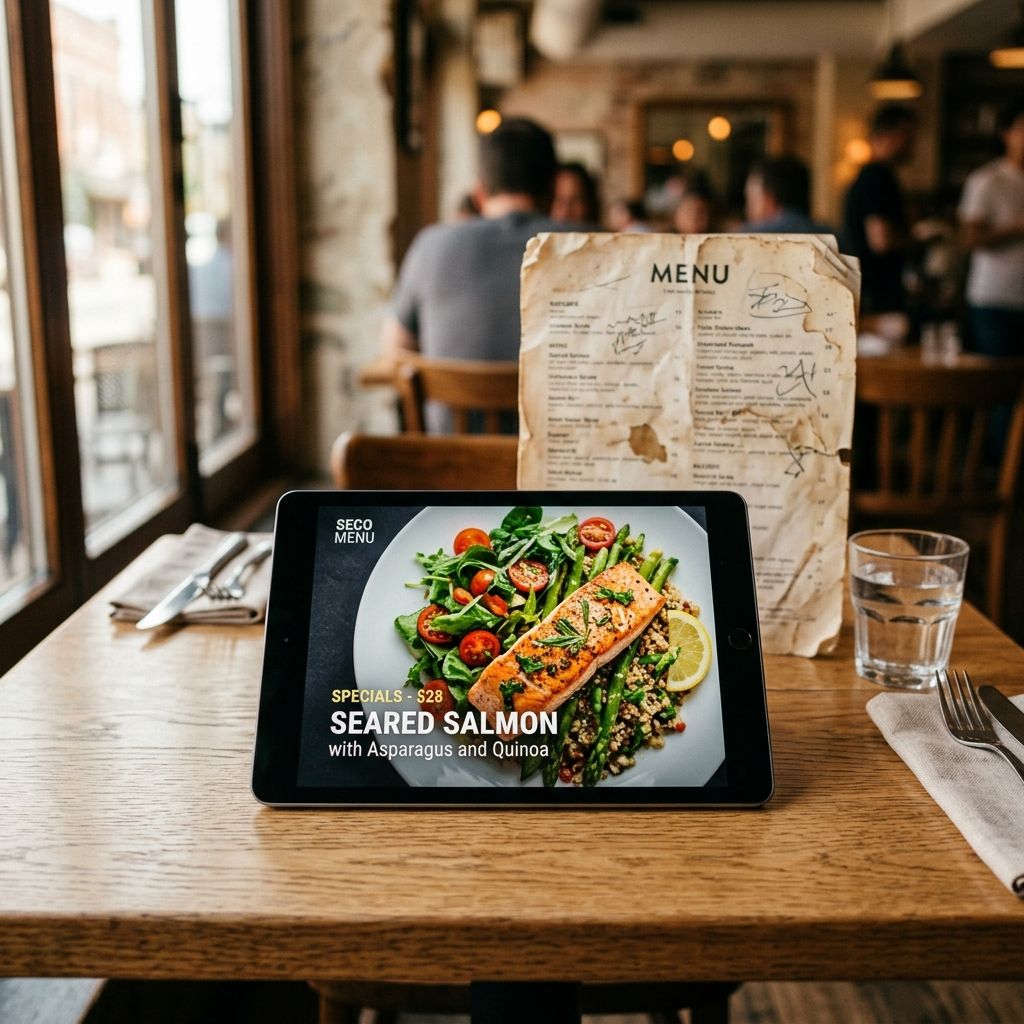
Take a moment to look at the menus currently sitting at your host stand. Are the edges slightly frayed? Are there faint coffee stains on the corner? Has a price been scratched out and rewritten with a ballpoint pen because food costs went up last week?
For decades, restaurants accepted these imperfections as the cost of doing business. But in 2026, the standard has changed. The paper menu is no longer just a vehicle for ordering food; it has become an expensive, unsanitary liability that is actively hurting your profit margins.
Here is why the smartest operators are abandoning the print shop and embracing restaurant menu software to create sleek, centralized digital storefronts.
1. The Financial Drain of Printing
If you run a dynamic, seasonal kitchen, you know the pain of the print shop.
Every time your chef creates a new special, every time your supplier raises the price of salmon, and every time you swap out your wine list, you have to pay to redesign and reprint your menus. For a mid-sized restaurant, professional printing costs can easily exceed thousands of dollars a year.
Worse still, because printing is expensive, many owners hesitate to make necessary price increases. They absorb the rising cost of ingredients simply because they don't want to pay for a new batch of menus.
By switching to a cloud-based digital menu design software, the cost of updating your menu drops to zero. You can change a price or add a seasonal special from your smartphone, and the update is instantly pushed to every table in your restaurant.
2. The Unsanitary Reality
In a post-2020 world, consumers are hyper-aware of hygiene. A physical menu is one of the dirtiest items in a restaurant. It is passed from guest to guest, handled by staff, and rarely sanitized thoroughly enough between seatings without damaging the paper.
A sticky, stained menu immediately lowers the perceived quality of your restaurant before the guest has even taken a bite.
A digital menu completely eliminates this issue. Guests simply scan a secure QR code on a small, easily sanitized table tent, and browse your offerings on their own personal devices. It is cleaner, safer, and inherently more premium.
3. Sustainability and Brand Image
Modern diners care deeply about sustainability. Throwing away hundreds of outdated paper menus every few months is an environmental waste that many of your guests notice.
Going fully digital is an easy, highly visible way to signal that your restaurant cares about its carbon footprint. It aligns your brand with modern, eco-conscious values, which is increasingly becoming a deciding factor for younger demographics when choosing where to dine.
4. The Loss of Upselling Opportunities
A paper menu cannot react to a customer. It cannot suggest a wine pairing when a guest looks at the steak. It cannot highlight a high-margin appetizer with a glowing, high-definition photo.
Digital menus transform your static list into an active sales tool. With features like AI menu assistants, your digital storefront can answer dietary questions and suggest pairings in real-time. Furthermore, you can use in-store analytics to see exactly which items your guests are looking at, allowing you to optimize the layout for maximum profitability.
Make the Switch Today
The transition to a digital menu is no longer a futuristic concept; it is an operational necessity. Stop letting outdated, dirty paper menus dictate your pricing strategy and damage your brand reputation.
Platforms like MenuClips allow you to launch a beautiful, branded digital menu in an afternoon—no app downloads or coding required. It is time to stop printing and start profiting.
---
Frequently Asked Questions (FAQ)
Q: Will older guests struggle to use a digital menu?
A: While some guests prefer physical menus, the vast majority of smartphone users are now completely comfortable scanning a QR code. For those who aren't, you can keep a very small stack of generic, un-priced physical menus behind the host stand as a backup.
Q: Do I need a web developer to build my digital menu?
A: Not at all. Modern platforms provide beautiful, pre-built templates. You simply upload your logo, choose your colors, and type in your menu items.
Q: Can a digital menu help if I run multiple locations?
A: Yes! A digital system is the only way to effectively manage multiple locations. You can update the master brand from one centralized dashboard, while allowing local managers to toggle out-of-stock items off in real-time.