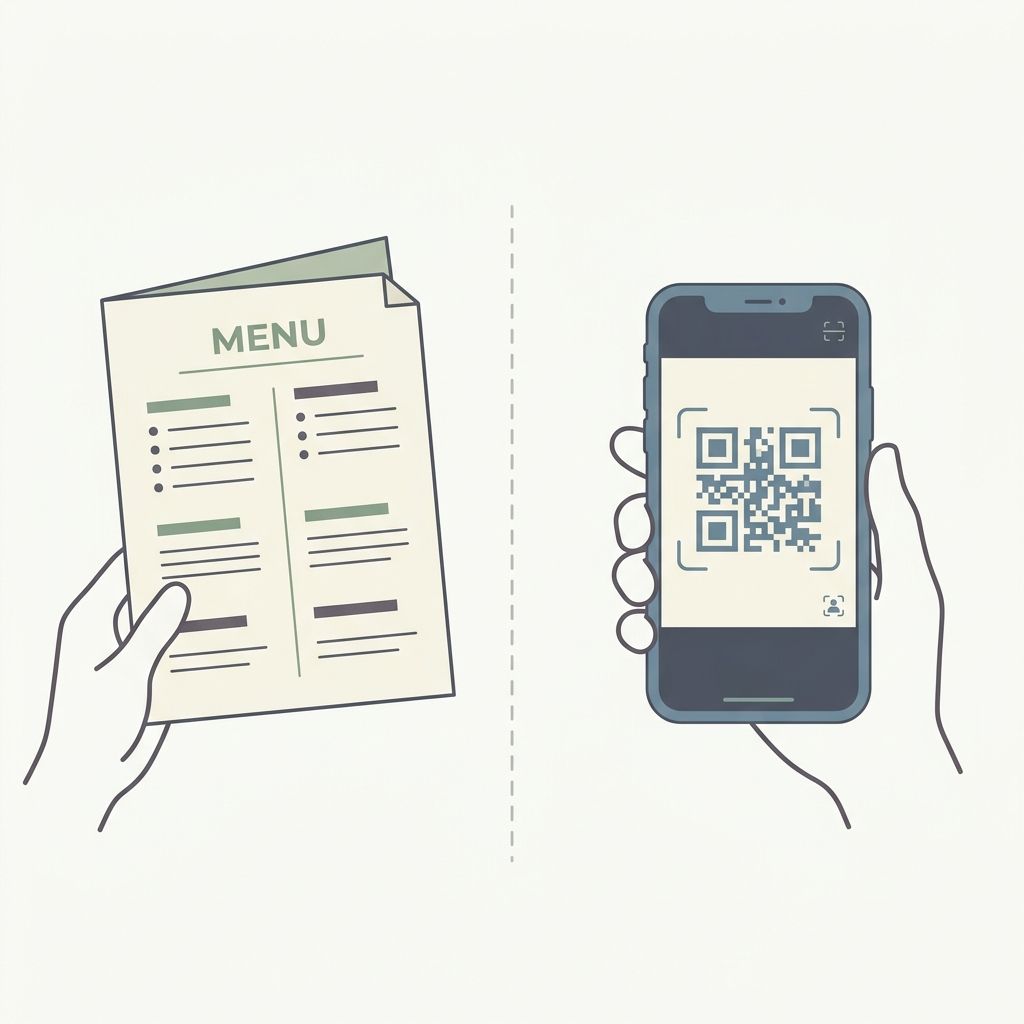
If you have been running a restaurant for more than a few years, you have a stack of old printed menus somewhere. Each one represents a reprint triggered by a price change, a seasonal update, or a supplier running short. Each reprint cost time and money.
QR menus were widely adopted during the pandemic as a hygiene measure, but the restaurants that stuck with them discovered something more useful: they are simply better for operations. But are they right for every restaurant?
Here is an honest comparison.
The Real Cost of Printed Menus
Printing costs add up faster than most operators realise. A set of quality laminated menus for a 30-cover restaurant typically costs $150 to $400 per print run. Most restaurants reprint three to five times a year minimum — for seasonal changes, price updates, and the inevitable spills and wear.
That is $450 to $2,000 per year, before accounting for design fees every time something changes.
Beyond the direct cost, there is the hidden cost of outdated information. Guests ordering dishes that are sold out, servers apologising for price discrepancies, managers scrawling corrections onto laminate. Every one of those moments erodes guest experience.
QR menus eliminate the reprint cycle entirely. Changes go live the moment you save them.
Update Speed: No Contest
With a printed menu, the path from "we need to change the fish dish price" to "guests see the new price" looks like this: brief the manager, update the design file, send to the printer, wait three to five business days, collect and distribute new menus, dispose of old ones.
With a QR menu: open your dashboard, update the price, save. Guests see it immediately.
For restaurants with seasonal menus, daily specials, or frequent supplier changes, this single advantage pays for a digital menu platform many times over.
Guest Experience
This is where the comparison gets more nuanced.
Where QR menus win:
- Guests browse at their own pace without waiting for a server to bring menus
- Photos of every dish help guests make confident, adventurous choices
- Dietary filters let guests with allergies or restrictions self-serve instantly
- AI assistance answers allergen and recommendation questions around the clock
- No physical handling — relevant for hygiene-conscious guests
- Supports multiple languages without printing separate menus
Where printed menus still hold their ground:
- Fine dining where presenting a beautiful leather-bound menu is part of the ritual
- Older demographics less comfortable with smartphones
- Venues with unreliable WiFi where digital browsing becomes frustrating
- Concepts where the physical menu is a deliberate part of the brand experience
Neither format wins universally. The right choice depends on your guests and your concept.
Data and Insights
Printed menus generate zero data. Your POS tells you what sold, but you have no visibility into what guests looked at, what they almost ordered, or which items they consistently skipped.
A QR menu platform gives you item view counts, popular categories, peak browsing times, and engagement data. This information helps you make smarter menu decisions: moving high-margin items to more prominent positions, understanding which specials are generating real interest, and knowing which items are consistently being ignored.
Over time, this data compounds into a genuine operational advantage.
Environmental Impact
A QR menu produces no physical waste. No laminated sheets heading to landfill, no paper menus discarded after a single use. For restaurants that care about sustainability and communicate that to guests, switching to digital is a credible and measurable action.
The Hybrid Approach
Many restaurants run both. A table card with a QR code alongside a short printed menu for guests who prefer paper. This removes friction for the "I do not have my phone" or "my battery is dead" edge cases while delivering digital benefits to the majority.
Worth considering if you serve a mixed demographic or want to transition gradually.
The Verdict
For most restaurants in 2026, a QR menu is the better operational choice. Lower ongoing cost, instant updates, richer guest experience through photos and AI features, and meaningful data you can act on.
The case for staying purely printed comes down to brand positioning. If a physical menu is a deliberate and important part of your concept, keep it. For everyone else, the numbers point clearly toward digital.
The reassuring part: switching does not have to be all-or-nothing. Start with QR, keep a few printed menus for guests who ask, and see what your data tells you after 60 days.